I made an apple crumble for guests once, and I was quietly proud of it all afternoon. The apples were from a neighbour's tree, the kitchen smelled like cinnamon, and I had even warmed the plates. Then I cut into it at the table and the topping slid off in one damp sheet, like a wet blanket coming off a bed. Underneath, the apples were swimming in juice. It tasted fine, honestly, but it looked like a mistake, and nobody went back for seconds.
I spent a long time assuming crumble was foolproof, and that assumption was the problem. A crumble topping is only three or four ingredients, but the temperature of the butter, the ratio of oats to flour, and the wetness of the fruit underneath all decide whether you get a crisp golden lid or a soggy mat. I fixed it one variable at a time, and the version I make now actually crunches when you tap it with a spoon.
Cold butter, and I mean cold
The first thing I got wrong was the butter. I used to leave it on the counter while I prepared the fruit, and by the time I got to the topping it was soft and easy to rub in. Easy is the trap. Soft butter coats the flour completely and turns the topping into a paste before it even reaches the oven. A paste cannot go crisp. It just melts flat and steams.
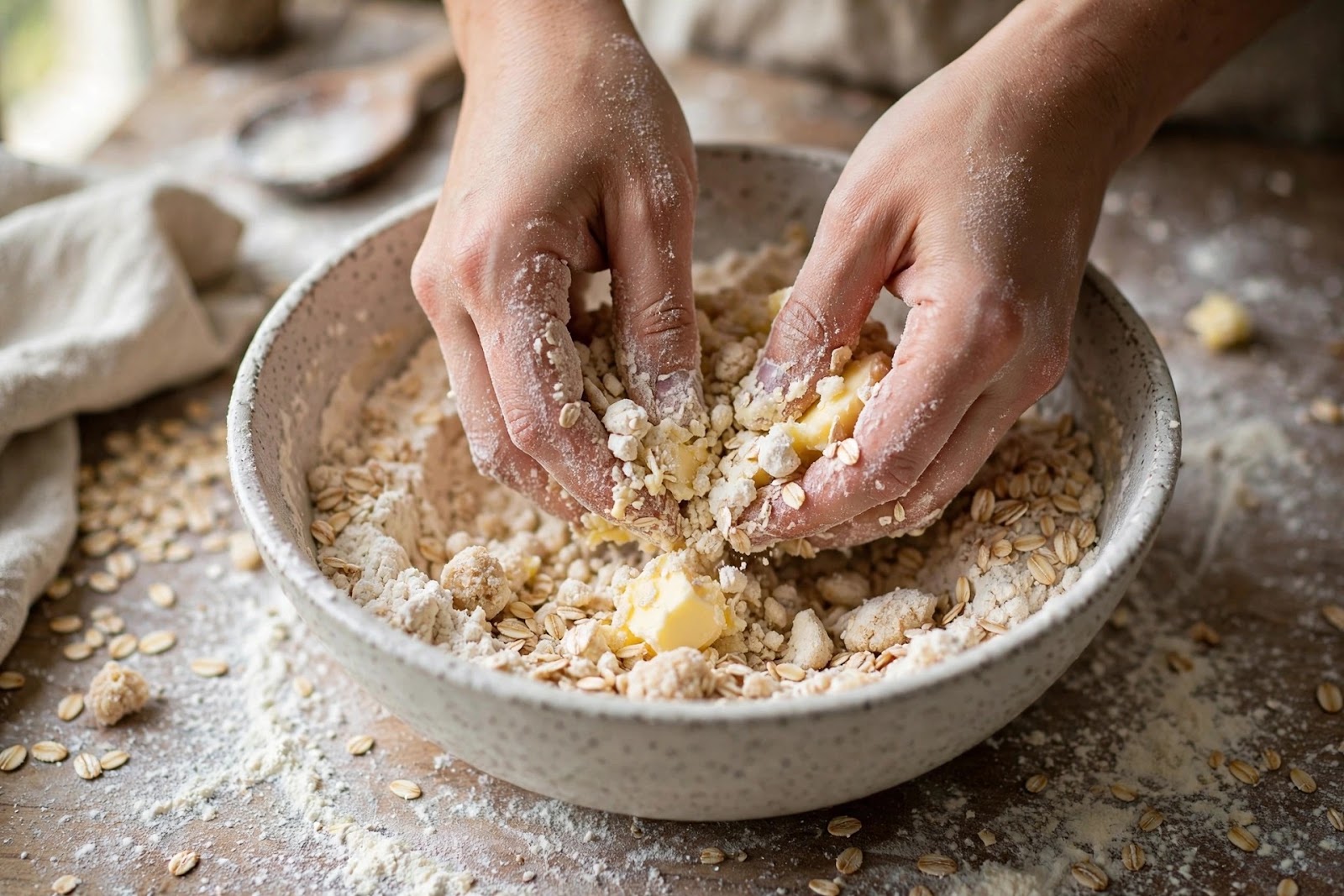
Now the butter stays in the fridge until the fruit is already in the dish, and I cut it into small cubes straight from the fridge. I rub it into the flour with just my fingertips, quickly, and I stop while there are still pea-sized lumps visible. Those lumps are the whole point. They melt in the oven and leave crunchy, buttery pockets behind. If your topping looks like smooth breadcrumbs, you have rubbed too far. If it looks a bit rough and uneven, you are exactly where you want to be.
On warm days I chill the whole bowl of topping for ten minutes before scattering it over the fruit. It sounds like an unnecessary step, but it is the difference between a topping that holds its shape and one that slumps into the juice below. Cold butter buys you time in a hot oven, and time is what makes the difference between crisp and soggy.
The oat ratio I finally settled on
The second fix was the oats. I used to make my topping with flour alone, and it baked into a hard, biscuity sheet that went soft within minutes of leaving the oven. Flour on its own has nothing to give the topping texture. Oats changed everything, but only once I got the ratio right.
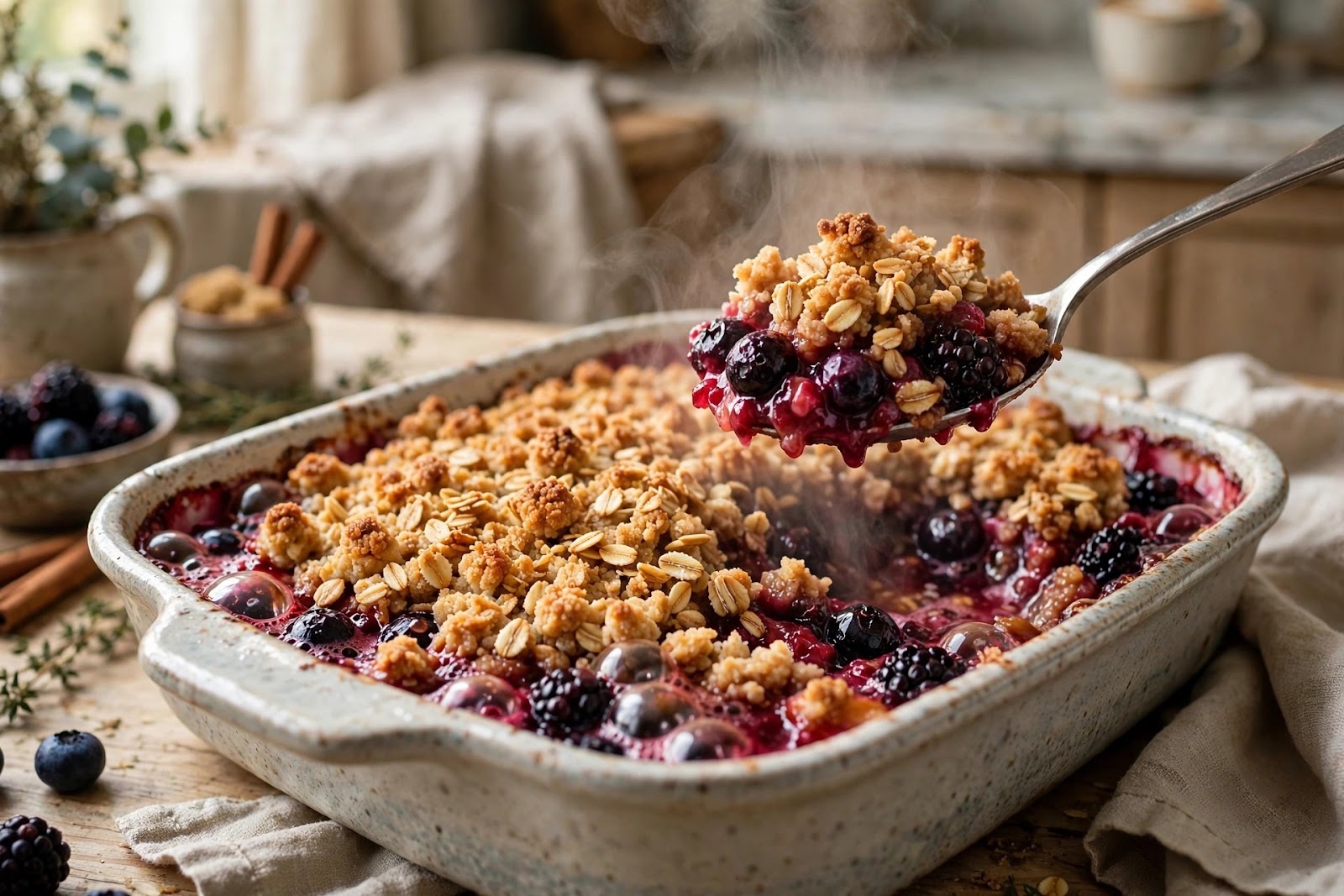
My mix now is 150 grams of plain flour, 100 grams of rolled oats, 100 grams of cold butter, and 80 grams of demerara sugar, plus a pinch of salt. The oats give crunch that survives the steam from the fruit below, and the demerara sugar melts into little caramelised edges that stay crisp as the crumble cools. I tried caster sugar once and the topping came out pale and one-note. Demerara is worth keeping in the cupboard for this one job alone.
I also stopped stirring the topping after scattering it. I used to press it down neatly with the back of a spoon, trying to make a tidy lid. Pressing packs the topping into a solid layer, and a solid layer traps steam underneath. Now I scatter it loosely, in clumps of different sizes, and leave gaps where the fruit can bubble up. The uneven surface looks rustic, and it bakes far more evenly than a pressed-down sheet ever did.
The fruit underneath is half the problem
Here is the part nobody told me: a soggy topping is often a wet fruit problem, not a topping problem. My early crumbles used apples sliced thin and tossed in with a generous sprinkle of sugar, and they released a flood of juice in the oven. No topping, however good, can stay crisp while sitting on a puddle.
I cook the fruit briefly first now, about five minutes in a pan with a spoonful of sugar, just until the slices start to soften but still hold their shape. Then I drain off most of the juice before the fruit goes into the dish. That drained juice is not wasted, by the way. I reduce it in the pan for a minute or two until it thickens, then drizzle a little of it back over the fruit. You keep the flavour and lose the flood.
Cutting the fruit thicker helps too. I slice apples and pears about a centimetre thick instead of paper-thin. Thin slices collapse into mush and release all their water at once. Thicker slices keep some bite, and they hold the topping up instead of letting it sink. For berries, which are wetter by nature, I toss them in a tablespoon of flour before they go in the dish. The flour thickens the juices as they bake, and the topping stays dry on top.
Dish, temperature, and the resting wait
The dish matters more than I expected. I used to bake crumble in a deep casserole dish, and the topping in the middle never got enough direct heat. It stayed pale while the edges burned. A wide, shallow dish changed that completely. My crumble dish is about 25 centimetres across and only 5 centimetres deep, and the topping gets even heat across the whole surface. If all you have is a deep dish, use less fruit and spread it thinner rather than piling it high.
Temperature is the other lever. I bake crumble at a true 190 degrees, and I check it with the same oven thermometer I now use for everything. At 180 the topping takes too long to crisp, and by the time it colours, the fruit underneath has turned to soup. At 190 the topping crisps in about 30 to 35 minutes while the fruit stays in distinct pieces. The top should be deep golden, not pale blonde, before you take it out. Pale means it will go soft within ten minutes of leaving the oven.
Then comes the hardest part, and I fail at it regularly: waiting. A crumble straight from the oven is molten underneath, and if you serve it immediately, the topping breaks apart and sinks into the juice. Ten minutes of resting lets the juices thicken slightly and the topping set. I cover it loosely with nothing at all, just leave it on the counter, and it stays crisp. Covering it with foil traps steam and undoes all your work in minutes.
Variations that still stay crisp
Once the basic version worked, I started playing with it, and most variations follow the same cold-butter rule. For a rhubarb crumble, which is very wet, I add an extra tablespoon of flour to the fruit and an extra five minutes in the oven. For plum crumble, I halve the plums and leave the stones in while baking, because stoned plums collapse faster. I take the stones out when serving, and I warn people at the table, which has become a running joke in my house.
A handful of chopped nuts in the topping adds crunch that lasts even longer. I use about 40 grams of flaked almonds or chopped hazelnuts, mixed in at the end so they sit on top and toast in the oven. Nuts burn faster than oats, so I watch the last five minutes carefully and I have learned to trust my nose. If it smells nutty and caramelised, it is done, even if the timer has a minute left.
One combination I come back to every autumn is apple and blackberry, with a pinch of cinnamon in the fruit and a little lemon zest in the topping. The zest is a small thing, but it lifts the whole dish and stops the sweetness from feeling heavy. I add it to the flour before rubbing in the butter, so it distributes evenly instead of sitting in one spot.
Freezing crumble properly
Crumble freezes brilliantly, and this is the part I wish I had known years ago. I assemble the whole dish unbaked, cover it tightly, and freeze it. It bakes straight from frozen at 190 degrees, just add fifteen minutes to the time and cover loosely with foil for the first twenty minutes so the topping does not overbrown before the fruit thaws. A frozen crumble on a busy evening feels like a small gift to yourself.
Baked leftovers are a different story. Once a crumble has been served and cooled, the topping will soften in the fridge no matter what you do. I reheat portions in a hot oven for ten minutes rather than the microwave, and that brings back most of the crunch. The microwave makes it rubbery, and I avoid it even when I am impatient, which is most evenings.
If your crumble topping keeps going soggy, start with the butter. Keep it cold, rub it in lightly, and stop before the mix looks smooth. Then look at your fruit and ask whether it is flooding the dish. Fix those two things and the topping will finally do what it is supposed to do: shatter slightly under the spoon, stay golden on top, and make people go back for seconds. Mine does now, and the wet-blanket crumble is firmly in the past, where it belongs.


