The first time I pulled a Basque cheesecake out of the oven, I thought I'd ruined it. The top was dark brown, nearly black in places, and the whole thing had puffed up like a soufflé before sinking back down as it cooled. It looked like something that had been left in the oven during a power cut. I stood there with my oven mitts on, staring at it, genuinely unsure whether to serve it or bin it. My brother walked in, looked at it, and said, "Is that supposed to look like that?" I had no idea. I'd followed the recipe. The recipe said burnt. But burnt?
It was supposed to look like that. I sliced it, and the inside was pale, creamy, almost custardy, with a centre that wobbled like a good panna cotta. It tasted like the best cheesecake I'd ever made — caramelised on top, barely set in the middle, with none of the dense, heavy feeling that regular cheesecake sometimes has. I've made it a dozen times since, and it's become the cake I make when I want maximum praise for minimum effort. Here's the secret: Basque cheesecake is one of the easiest cakes in the world to make, and it forgives almost everything except overbaking it into a brick.
If you've only ever made classic cheesecake, with its water bath and its slow cooling and its constant fear of cracks, the Basque version will feel like cheating. There's no crust. There's no water bath. There's no cooling it in the oven with the door cracked open for an hour. You mix everything in one bowl, pour it into a lined tin, bake it hot, and let it burn. The burnt top isn't a mistake. It's the entire point.
Where this cake comes from
The Basque burnt cheesecake comes from La Viña, a restaurant in San Sebastián in northern Spain, where it's been served since the 1990s. The story goes that the chef was trying to make a cheesecake and accidentally baked it too hot, and the result — deeply caramelised on top, creamy in the middle — became the house signature. Whether the accident story is true or just good marketing, the cake itself is real, and it's worth understanding why it works before you make it.
Regular cheesecake is baked low and slow because you're trying to keep it pale, smooth, and crack-free. Basque cheesecake does the opposite. It bakes at 220°C, hot enough that the top caramelises deeply while the centre stays soft. The high heat is what gives it that dark, almost bitter-sweet crust on top, which balances the rich, sweet creaminess underneath. Without the burn, it's just a crustless cheesecake.
The other thing that makes it different is the texture. Because there's no crust and no water bath, the cake sets from the outside in, and the centre stays soft — softer than you think a cheesecake should be. When you slice it, the middle should be just barely set, wobbling slightly when you shake the plate. If you bake it until the centre is firm, you've gone too far. Every instinct from baking other cakes tells you that wobble means underdone. With this cake, wobble means perfect.
What goes in it
The ingredient list is short, and that's part of the appeal. For a 20-centimetre cake you need 600 grams of full-fat cream cheese, 200 grams of caster sugar, 4 large eggs, 300 millilitres of double cream, 30 grams of plain flour, a teaspoon of vanilla extract, and a pinch of salt. That's it. Seven ingredients, one bowl, no crust to make, no biscuit crumbs to crush.
Use full-fat cream cheese, and let it come to room temperature before you start. This matters more here than in most recipes, because if the cheese is cold it won't blend smoothly, and you'll end up with little white lumps in the batter that never quite disappear. I leave mine on the counter for an hour. If you forgot, cut it into cubes and microwave it for twenty seconds at a time until it's soft.
The flour is the one ingredient that surprises people. Thirty grams isn't much, but it does real work — it helps the cake hold its shape without making it heavy, and it keeps the centre from turning into soup. Some recipes leave it out entirely, and the result is closer to a custard. I prefer it with the flour. It gives the cake just enough structure to slice cleanly while staying creamy.

The one-bowl method
Preheat the oven to 220°C, and line a 20-centimetre springform tin with two sheets of baking parchment. Don't cut the parchment to fit neatly. Let it crumple up the sides and stick out above the rim by a good five centimetres. The parchment will be taller than the tin, and that's fine — the cake rises above the tin as it bakes, and the parchment keeps it from spilling over. The crumpled look is traditional. It also means you don't have to grease anything.
Beat the cream cheese and sugar together until smooth. This takes about two minutes with an electric mixer, or a bit longer by hand. Scrape down the sides of the bowl halfway through, because the cheese loves to hide in lumps at the bottom. Add the eggs one at a time, beating briefly after each one. Don't overbeat at this stage. You're mixing, not whipping — too much air makes the cake puff up dramatically and then collapse into a crater.
Add the cream, vanilla, and salt, and mix until just combined. Then sift in the flour and fold it in gently. The batter will be thin, thinner than you'd expect for a cheesecake. That's normal. It pours like thick cream, not like a cake batter. Pour it into the lined tin, give the tin a gentle tap on the counter to pop any big air bubbles, and put it in the oven.
Now comes the hard part: leaving it alone. Bake for 45 to 50 minutes. The top will darken quickly — by the thirty-minute mark it will look too dark, and by forty minutes you'll be convinced you've ruined it. You're not. At 45 minutes, open the oven and give the tin a gentle shake. The edges should be set and the centre should jiggle like jelly. If the whole thing still sloshes, give it another five minutes. If the centre jiggles, it's done. Take it out.
The cooling nobody warns you about
Here's the part that surprised me the most the first time: the cake sinks. It puffs up in the oven, sometimes dramatically, and then as it cools it deflates, sometimes by a good three centimetres. The first time I saw this happen I was sure something had gone wrong. It hadn't. The sinking is normal, and it's actually what creates that lovely dense-but-creamy texture. The edges stay taller than the centre, which gives the finished cake its characteristic sunken look.
Let it cool in the tin on a wire rack for at least an hour, then put the whole tin in the fridge for at least four hours, or overnight if you can. I know, waiting overnight for a cake you could eat warm is hard. But the cold does something important: it firms the centre just enough to slice cleanly while keeping it custardy. A warm Basque cheesecake is delicious, but it slices like a trifle. A chilled one slices like a cake and eats like a custard.
When you're ready to serve, release the springform and peel the parchment down from the sides. The edges of the parchment will have gone crisp and dark in the oven, and the cake underneath will be a beautiful golden brown where the parchment touched it. Don't try to make it look neat. The rustic, crumpled look is part of the charm. Dust it with nothing, serve it with nothing, and let it speak for itself.
What can go wrong
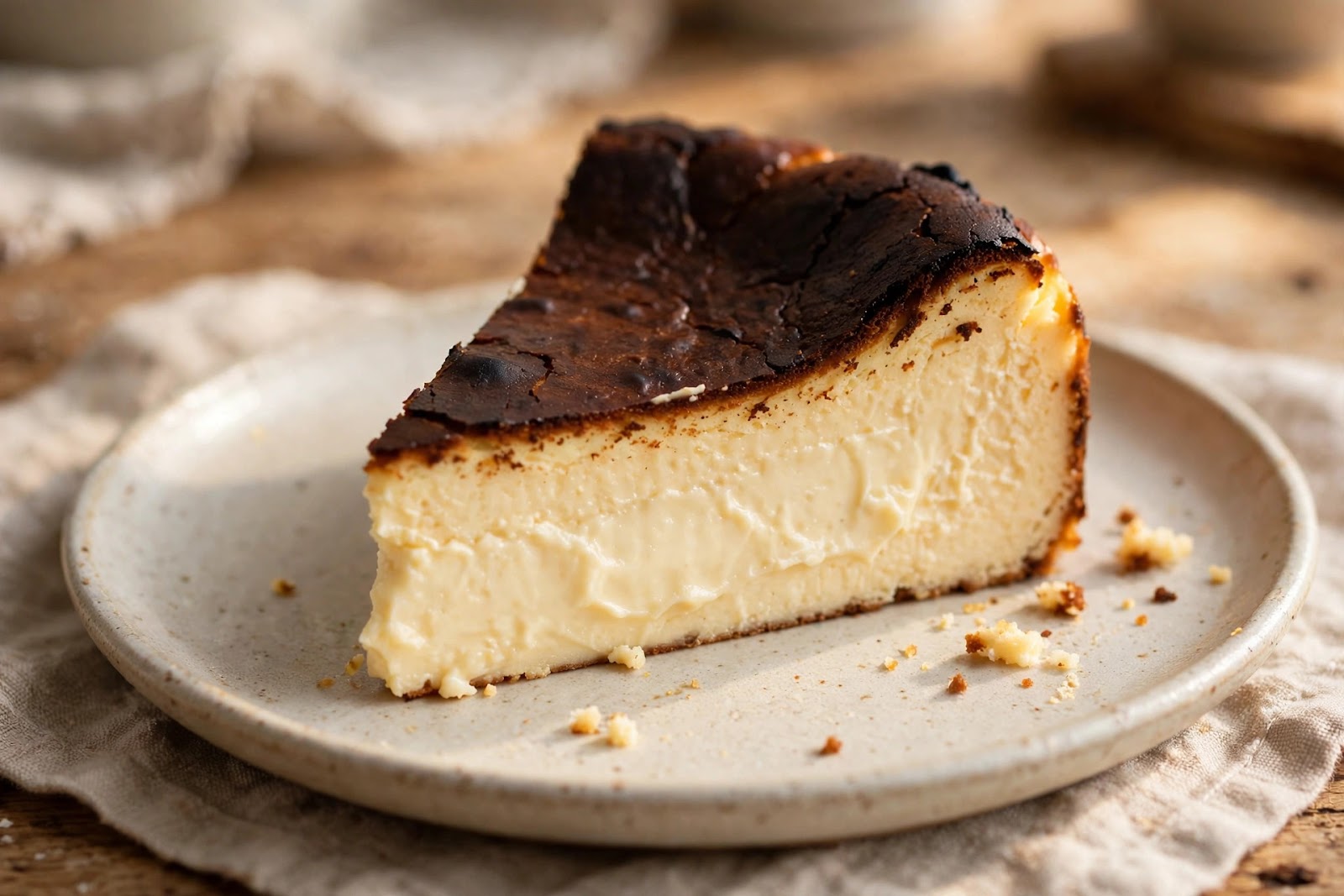
The most common mistake is baking it too long. I did this on my third attempt, because the top looked so dark I was sure the inside must be done, and then I gave it another ten minutes "just to be safe." The result was a perfectly respectable cheesecake, but it had lost the wobble. The centre was firm, the texture was ordinary, and the magic was gone. Basque cheesecake should be just barely set in the middle. If you can slice it and the centre holds its shape but yields to the fork like a thick custard, you got it right.
The other mistake is using low-fat cream cheese. Don't. The fat is doing structural work here — it's what makes the cake rich and creamy instead of rubbery. Low-fat cream cheese has more water and more stabilisers, and the cake comes out with a strange, almost bouncy texture. This is not the recipe to lighten up.
And if the top isn't dark enough? Your oven might be running cool, or your top element might be weak. Next time, move the cake to the top rack for the last ten minutes, or bump the temperature to 230°C. The top should be a deep mahogany brown, nearly black at the highest points. If yours comes out pale gold, it will still taste good — but it won't taste like a Basque cheesecake. The bitterness of the caramelised top is what makes the whole thing work.
How I serve it
I serve it plain, straight from the fridge, with a sharp knife dipped in hot water between slices. The hot knife is the one bit of fuss I'll insist on — a cold knife drags through the creamy centre and smears it, while a hot knife cuts cleanly. Wipe the blade, dip it again, cut the next slice. It takes thirty seconds and the slices look like they came from a bakery.
It keeps in the fridge for three days, covered. The top softens slightly by day two, but the flavour actually deepens. I wouldn't freeze it — the texture never quite comes back. But honestly, in my house it has never lasted long enough for storage to matter.
Why this cake changed how I bake
Before I made my first Basque cheesecake, I thought good baking meant control. Precise temperatures, careful timing, water baths, no cracks, no browning. This cake taught me the opposite: sometimes the best results come from letting go. Let the top burn. Let the centre wobble. Let the cake sink. The imperfections aren't flaws to fix — they're the whole reason it works.
That lesson has crept into the rest of my baking. I'm less afraid of a dark crust on my bread now. I pull my cookies out a minute earlier than I used to. I trust the jiggle test on custards instead of baking them until they're firm. The Basque cheesecake didn't just give me a great recipe. It gave me permission to stop chasing perfection and start chasing flavour.
If you've been intimidated by cheesecake — the water baths, the cracks, the cooling rituals — this is your way in. One bowl, seven ingredients, a hot oven, and the courage to let the top go dark. Then slice it, watch the centre wobble, and enjoy a cake that looks burned and tastes like a dream.


